
If there’s one thing organizations need to recognize more than ever before, it’s this: your people are the lifeblood of your company, and if you aren’t investing in real employee retention strategies right now, you could be harming the financial health of your business for years to come.
Recent Gallup polls have found that replacing a specialized, leadership, or revenue-generating employee can cost as much as 200% of their annual salary.
Let that sink in for a moment.
For a leader earning $200,000 a year, the estimated cost of replacement could reach $400,000.
And that’s just the beginning of the conversation.
It’s More Than Losing a Team Member
When a valued employee leaves, organizations lose more than a person in a position. They risk losing institutional knowledge, customer relationships, team momentum, and the experience that keeps the business running. The financial impact extends well beyond recruiting a replacement.
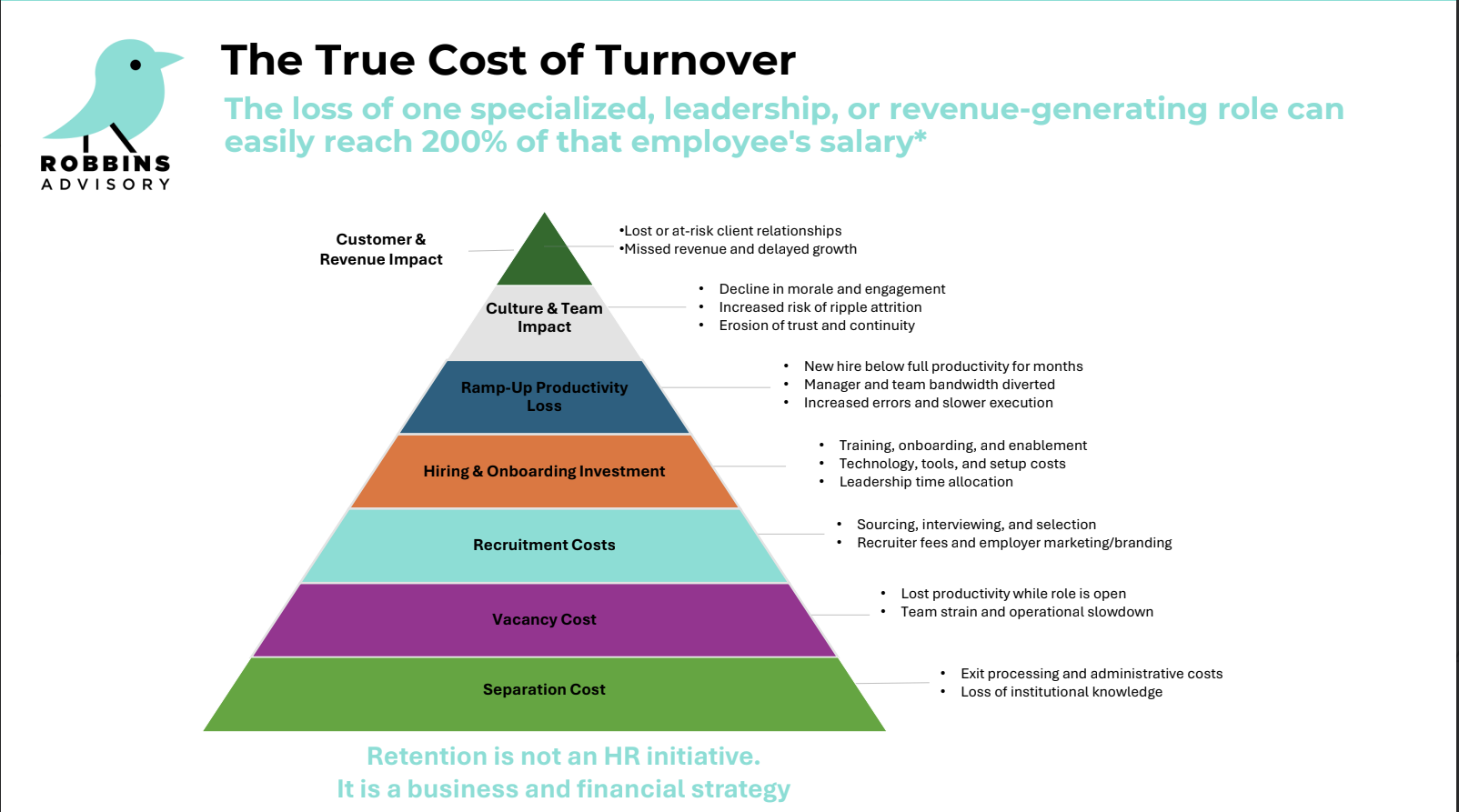
Consider what adds up when a key employee walks out the door:
The cost of finding someone new. Recruiting fees, interviewing, selection, and the time leaders spend searching for the right candidate all carry a price tag.
The productivity gap. Positions can remain vacant for months, leaving work unfinished or shifting responsibilities to already stretched teams. And even after a new hire arrives, it takes time to get up to speed.
The investment in onboarding. Training, technology, orientation, and management attention are all necessary to help a new employee succeed. Those resources come at the expense of other priorities.
The ripple effect on the team. When one person leaves, colleagues often absorb the additional workload. Morale can take a hit, mistakes can increase, and remaining employees may begin questioning their own future with the organization. Sometimes, one resignation becomes the catalyst for another.
The impact on business performance. Customer relationships may suffer. Revenue opportunities can be missed. Critical expertise and years of institutional knowledge can disappear overnight.
Now consider the other side of that equation: what an organization can protect by retaining the people who know its business, serve its customers, develop its teams, and keep operations moving.
That’s where retention becomes more than a workforce metric. It becomes a business priority.
From Managing Turnover to Investing in Retention
Let's be realistic. Not every departure can, or should, be prevented. People grow, priorities change, and sometimes moving on is the right decision for both the employee and the organization.
But when valued employees leave because of issues an organization could have addressed, it's worth asking a difficult question:
Was the departure inevitable, or were there warning signs we missed?
Too often, retention conversations begin after someone resigns. We conduct exit interviews, analyze turnover reports, scramble to fill vacancies, and try to understand what went wrong.
Those activities have value. But by then, we're managing the consequences rather than addressing the conditions that contributed to the departure.
What if we got ahead of them?
What if we regularly asked whether our best people see a future with us? Whether managers have the skills and support to lead effectively? Whether expectations are clear, contributions are recognized, and employees have meaningful opportunities to grow?
What if we made time to understand what our people need to stay engaged and do their best work—before disengagement turns into a resignation?
These aren't just nice-to-have conversations. They're opportunities to identify risks, strengthen leadership, and make smarter decisions about the workforce.
Retention Doesn't Happen by Accident
Keeping good people requires more than competitive compensation or an occasional employee engagement survey. It requires leaders to pay attention to the everyday experiences that shape whether someone chooses to stay.
That means investing in effective managers, creating clarity around expectations, recognizing contributions, developing talent, and addressing challenges before they become reasons to leave.
It also means giving employees a safe and meaningful way to share what's working, what's not, and what might cause them to consider other opportunities.
Organizations don't have to wait for an annual survey or an exit interview to learn these things. Stay interviews, thoughtful leadership conversations, targeted development, and proactive workforce planning can help surface concerns while there is still an opportunity to act.
The goal isn't to keep everyone forever. It's to create an environment where good people have compelling reasons to stay—and where leaders have the insight and tools to address retention risks before they become costly losses.
The Human Side of Performance Is a Business Imperative
This is the work we care deeply about at Robbins Advisory.
We help organizations strengthen the human side of performance through human capital consulting, leadership development, workforce strategies, and executive wellness coaching. We partner with leaders to address challenges early, build stronger teams, and create the conditions that allow people and organizations to perform at their best.
Because retaining talent isn't simply about avoiding the expense of replacing someone.
It's about protecting performance, preserving institutional knowledge, strengthening culture, and giving your organization the best chance to deliver on its goals.
When organizations invest in their people, they're investing in their ability to execute their strategy.
And when they overlook the human factors that drive performance, the costs can show up in places far beyond the HR budget.
Retention isn't just an HR initiative. It's a business and financial strategy. And the best time to invest in it is before someone decides to leave.
So, here's my question for leaders:
Are you investing in keeping your best people—or budgeting for replacing them?
Connect with Robbins Advisory today by calling (617) 383-7954, emailing us at info@robbins-advisory.com, or filling out our simple contact form.
